If a workplace looks clean but the operation is unstable, the problem has not been solved. Modern companies hire Office Cleaning Services to protect workflow continuity, employee trust, regulatory alignment, and brand perception. When cleaning fails, it rarely fails visually first. It fails operationally.
What Are Office Cleaning Services in Operational Terms
Most businesses define cleaning by tasks. Operational leaders define it by predictability.
Professional Office Cleaning Services include structured, recurring, and documented cleaning processes designed to maintain work environments such as:
• Corporate Offices
• Professional Offices
• Law Offices
• Accounting Offices
• Financial Offices
• Administrative Offices
• Shared Offices
At its core, the service covers:
• Desk Cleaning
• Workstation Cleaning
• Conference Room Cleaning
• Reception Area Cleaning
• Break Room Cleaning
• Restroom Cleaning
• Trash Removal
• Recycling Services
• Floor Cleaning
• Carpet Cleaning
• Hard Floor Cleaning
• Interior Window Cleaning
• High Touch Surface Cleaning
These are not isolated tasks. They form a structured operational cycle. When properly executed, cleaning becomes invisible to daily workflow.
Why Do Modern Businesses Invest in Recurring Commercial Office Cleaning
The reason is not aesthetics. It is operational protection.
Primary Drivers Behind Hiring a Commercial Cleaning Company
- Protect employee productivity
- Maintain consistent workplace hygiene
- Reduce internal complaints
- Safeguard brand perception
- Avoid compliance risks
Each of these drivers connects directly to management accountability.
Practical Example
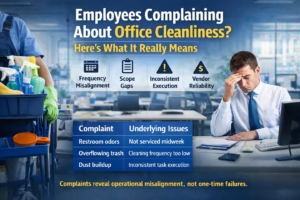
A 50 employee accounting firm experienced recurring complaints about restroom sanitation and trash overflow. Management initially blamed workload. After implementing structured Recurring Office Cleaning with documented Cleaning Checklists, internal complaints dropped by over 70 percent within two months.
The change was not cosmetic. It was structural.
Who Is Responsible for Hiring Office Cleaning Services
In most cases, the decision maker is:
• Office Manager
• Facilities Manager
• Property Manager
• Managing Partner
These roles are accountable for vendor stability. They do not seek marketing promises. They seek operational reliability.
When Should a Business Reevaluate Its Current Cleaning Provider
The signals are operational, not emotional.
Warning Signs of Inconsistent Janitorial Services
• Missed cleaning appointments
• Employee complaints
• Uneven cleaning standards
• Poor communication
• Lack of documented procedures
These indicators show systemic instability. If multiple signs appear simultaneously, the issue is rarely temporary. It is structural.
Where Does Cleaning Impact Business Performance
Cleaning affects more than surface appearance.
Operational Impact Areas
• Employee morale
• Visitor perception
• Health and safety compliance
• Workflow continuity
• Asset longevity
Each impact area carries measurable consequences. For example, neglected carpet maintenance reduces carpet lifespan significantly, increasing replacement cost.
How Do Professional Office Cleaning Services Actually Work
This is where most competitors provide vague explanations. Operational clarity matters.
The Breakdown
| Question | Operational Answer |
| What | Structured recurring cleaning tasks |
| Why | Operational continuity and hygiene control |
| Who | Trained and background checked cleaning staff |
| Where | Defined office zones and common areas |
| When | Daily, weekly, or scheduled after hours |
| How | Documented checklists and quality control |
| How Much | Based on square footage, frequency, and complexity |
Each element must be predefined before contract signing.
What Determines the Cost of Office Cleaning Services
Cost is influenced by operational variables.
Key Pricing Variables
• Square footage
• Cleaning frequency
• Number of restrooms
• Floor type
• Special sanitation requirements
• After hours access
Two offices of identical size may pay different rates due to frequency and complexity. Price without context is meaningless.
Advantages of Structured Recurring Office Cleaning
Primary Advantages
• Predictable hygiene standards
• Reduced employee complaints
• Lower long term maintenance cost
• Consistent brand presentation
• Reduced vendor switching
After reviewing these points, it becomes clear that the advantage is not simply cleanliness. It is risk mitigation.
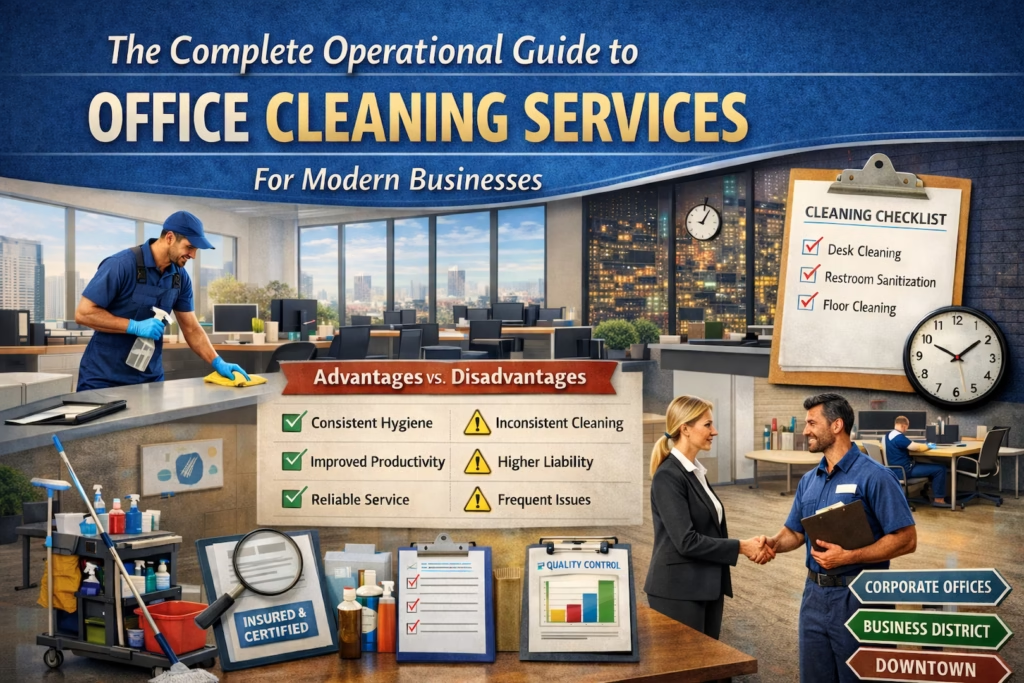
Advantages Versus Disadvantages Comparison
| Factor | Structured Recurring Cleaning | Inconsistent Cleaning |
| Reliability | High | Low |
| Employee Satisfaction | Stable | Fluctuating |
| Cost Predictability | Clear | Uncertain |
| Brand Perception | Professional | Risk Exposure |
| Vendor Stability | Long term | Frequent Replacement |
The comparison highlights that inconsistency generates hidden operational costs.
Daily Versus Weekly Scheduled Office Cleaning
When Daily Cleaning Is Necessary
• High employee density
• High restroom usage
• Client facing operations
When Weekly Cleaning Is Sufficient
• Low traffic offices
• Limited shared spaces
• Smaller teams
Choosing frequency requires evaluating usage patterns, not assumptions.
What Reduces Risk When Hiring a Commercial Cleaning Company
Risk Mitigation Checklist
• Background Checked Cleaners
• Insured Cleaning Company
• Documented Quality Control Procedures
• Clear Service Level Agreement
• Defined communication channel
Each element reduces uncertainty. Vendor professionalism is visible in documentation, not advertising.
The Role of Health and Compliance
Modern workplaces must maintain hygiene aligned with:
• Workplace Hygiene Standards
• OSHA Cleaning Guidelines
• Health and Safety Standards
Why Compliance Matters
Failure to meet sanitation standards increases liability exposure. A structured cleaning provider supports documentation readiness during inspections or audits.
What Happens After Hiring a Cleaning Provider
The contract is the beginning of operational integration.
Implementation Phase
- Walkthrough and site assessment
- Definition of cleaning zones
- Creation of checklist
- Schedule confirmation
- Quality control alignment
Each step ensures alignment between expectation and delivery. Skipping these steps creates miscommunication.
Long Term Retention and Stability
Vendor longevity is often overlooked.
What Keeps Cleaning Contracts Stable
• Consistent service
• Clear communication
• Transparent pricing
• Responsive management
Stable partnerships eliminate the operational disruption caused by vendor turnover.
Executive Takeaway
Modern businesses do not need cleaning. They need operational certainty supported by structured Office Cleaning Services, documented routines, predictable schedules, and risk controlled processes. When cleaning becomes invisible and complaints disappear, the system is working.
How to Define the Right Cleaning Scope for Your Office
Before hiring any Office Cleaning Company, the first operational decision is scope definition. Without clarity, even experienced providers will fail expectations.
What Should Be Included in a Standard Scope
A professional scope for Commercial Office Cleaning should clearly outline:
• Desk and Workstation Cleaning
• Cubicle Cleaning
• Conference Room Cleaning
• Reception Area Cleaning
• Break Room Cleaning
• Restroom Sanitization
• Trash Removal and Recycling Services
• Floor Care Including Carpet Cleaning and Hard Floor Cleaning
• Interior Glass Cleaning
Each item must be tied to frequency. Tasks without schedule create inconsistency.
Why Undefined Scope Creates Operational Friction
When expectations are assumed rather than documented, disputes arise. For example, many offices expect deep carpet extraction monthly, while providers include only vacuuming unless specified. The mismatch leads to dissatisfaction, not necessarily poor service.
Clear scope protects both sides.
How Cleaning Frequency Impacts Workplace Stability
Frequency is not a cosmetic decision. It is a workload calculation.
Office Usage Variables That Influence Frequency
- Number of employees
- Visitor volume
- Shared kitchen usage
- Restroom traffic
- Floor material type
Higher restroom usage demands more frequent Restroom Cleaning and Bathroom Sanitization. Heavy foot traffic accelerates wear on carpets and hard floors.
Example Scenario
An office with 25 employees working hybrid schedules may require:
• Daily trash removal
• Three times per week restroom sanitization
• Weekly floor vacuuming
• Monthly deep floor maintenance
A 100 employee full occupancy office likely requires daily comprehensive cleaning.
Frequency must align with real activity patterns, not generic packages.
What Differentiates Basic Cleaning from Structured Professional Office Cleaning Services
Many businesses assume all cleaning providers operate the same way. They do not.
Operational Differences
| Feature | Basic Cleaning Provider | Structured Professional Provider |
| Checklist Documentation | Often Informal | Formal Documented Checklists |
| Quality Control | Reactive | Proactive Review Process |
| Staff Screening | Varies | Background Checked Cleaners |
| Insurance | Not Always Clear | Fully Insured Cleaning Company |
| Communication | On Demand | Scheduled Reporting |
The difference is operational governance.
Basic providers focus on task execution. Structured providers focus on system stability.
How After Hours Cleaning Protects Productivity
Many modern offices operate without interruption. Cleaning during work hours introduces friction.
Benefits of After Hours Office Cleaning
• No disruption to meetings
• Reduced employee distraction
• Increased cleaning efficiency
• Improved privacy protection
Cleaning teams working after hours operate within defined access protocols, minimizing workflow interference.
The advantage is not simply convenience. It is productivity protection.
What Role Does Technology Play in Modern Office Cleaning Services
While cleaning remains physical work, oversight is increasingly digital.
Operational Tools Used by Advanced Providers
• Digital checklists
• Service verification logs
• Performance reporting
• Time tracking validation
These tools provide transparency. They allow managers to verify service without constant supervision.
Transparency reduces micromanagement.
Cost Structure Breakdown for Commercial Cleaning
Understanding cost prevents unrealistic expectations.
Core Pricing Drivers
• Square footage
• Cleaning frequency
• Number of restrooms
• Specialized sanitation requirements
• Floor material complexity
• Accessibility factors
Cost Sensitivity Table
| Variable | Low Impact Scenario | High Impact Scenario |
| Square Footage | 2000 sq ft | 15000 sq ft |
| Restrooms | 1 restroom | 6 restrooms |
| Frequency | Weekly | Daily |
| Floor Type | Hard floor only | Mixed carpet and tile |
| Traffic Volume | Low | High |
Each added complexity increases labor allocation and cost.
Cost must reflect workload reality.
Environmental Considerations in Office Cleaning
Modern businesses increasingly consider sustainability.
Eco Conscious Cleaning Elements
• Eco Friendly Cleaning Products
• Non Toxic Cleaning Solutions
• EPA Approved Cleaning Products
• Responsible waste management
Sustainable cleaning protects both employee health and brand positioning.
Environmental consideration does not mean weaker sanitation. It means controlled chemical selection.
What Happens During a Walkthrough
A walkthrough is not a sales ritual. It is a diagnostic step.
Walkthrough Objectives
- Identify cleaning zones
- Assess restroom traffic
- Review floor conditions
- Evaluate access points
- Confirm schedule feasibility
During this stage, providers calculate realistic labor hours.
Skipping walkthroughs leads to underpricing or underdelivery.
How to Evaluate a Cleaning Proposal
Not all proposals contain equal clarity.
What to Look For
• Clear task breakdown
• Defined cleaning frequency
• Insurance confirmation
• Service Level Agreement details
• Communication structure
A vague proposal signals future ambiguity.
Clarity in documentation reflects clarity in operations.
Risk of Choosing Based Solely on Price
Low price often signals hidden compromise.
Hidden Costs of Cheap Cleaning
• Higher staff turnover
• Inconsistent service
• Increased management time
• Frequent vendor replacement
Over time, cheap service becomes expensive due to instability.
Operational managers benefit more from predictability than short term savings.
The Strategic Value of Long Term Cleaning Partnerships
Cleaning should not be reactive. It should be embedded into business infrastructure.
Long Term Benefits
• Consistent standards
• Familiarity with layout
• Reduced onboarding time
• Stable communication
When cleaning becomes predictable, it fades into the background.
That is the goal.
How to Build an Internal Cleaning Oversight System Without Micromanaging
Hiring a Commercial Cleaning Company does not eliminate oversight. It restructures it. The goal is controlled visibility without operational friction.
What an Effective Oversight Model Includes
• Defined service scope
• Approved Cleaning Checklists
• Scheduled review cadence
• Single point of contact
• Escalation protocol
Oversight should verify performance trends, not inspect every trash bin.
Practical Oversight Example
A facilities manager reviews service logs biweekly and conducts a short visual audit once per month. If patterns of missed tasks appear, they are addressed at the management level.
This method maintains accountability while preserving trust.
How Cleaning Impacts Employee Experience and Retention
Workplace hygiene is directly connected to perception of leadership.
Areas That Influence Employee Satisfaction
• Restroom cleanliness
• Break room sanitation
• Desk surface hygiene
• Odor control
• Floor appearance
When these areas are consistently maintained, employees perceive operational stability.
Neglect in shared spaces creates frustration faster than leadership often realizes.
The True Cost of Switching Cleaning Providers
Changing vendors disrupts operational continuity.
Hidden Switching Costs
- Time spent evaluating new providers
- Walkthrough scheduling
- Contract review
- Adjustment period
- Internal communication
Each switch consumes management bandwidth.
Frequent switching often signals misaligned expectations during initial contracting.
What Makes a Cleaning Provider Operationally Scalable
Growth should not force vendor replacement.
Scalability Indicators
• Ability to expand service frequency
• Additional staffing capacity
• Structured management oversight
• Documented training protocols
If your team doubles in size, your Recurring Office Cleaning Services should adjust without operational stress.
Scalability reflects organizational depth, not just workforce size.
How Office Type Influences Cleaning Complexity
Not all offices carry the same cleaning profile.
Law Offices
• Confidential document handling awareness
• Controlled after hours access
Accounting and Financial Offices
• High seasonal workload periods
• Extended work hours during tax season
Corporate Headquarters
• High meeting room turnover
• Elevated visitor volume
Understanding vertical nuances ensures realistic expectations.
Floor Maintenance Strategy for Long Term Asset Protection
Flooring is one of the highest wear assets in any office.
Carpet Maintenance Considerations
• Regular vacuuming frequency
• Periodic deep extraction
• Spot treatment protocol
Hard Floor Maintenance
• Scheduled mopping
• Periodic polishing
• Surface protection routines
Ignoring preventive floor care accelerates replacement cycles.
Structured maintenance extends asset life significantly.
Compliance and Risk Exposure in Modern Work Environments
Health and safety standards are not optional.
Relevant Compliance Areas
• Workplace hygiene expectations
• Sanitization of high touch surfaces
• Restroom sanitation standards
• Waste disposal protocols
A structured provider supports documentation readiness for inspections.
Compliance failures carry financial and reputational consequences.
Evaluating Cleaning Performance Over Time
Short term satisfaction can mask long term decline.
Performance Metrics to Monitor
• Frequency of complaints
• Missed cleaning incidents
• Response time to issues
• Overall workspace condition
Monitoring trends over months provides more accurate insight than isolated incidents.
Consistency defines service quality.
Strategic Decision Framework
Application for Office Cleaning
| Element | Strategic Question |
| What | What tasks are critical to daily operations |
| Why | Why does this frequency align with office usage |
| Who | Who is accountable for service oversight |
| Where | Where are high traffic risk zones |
| When | When should cleaning occur to avoid disruption |
| How | How will performance be verified |
| How Much | How does pricing align with workload |
This framework transforms cleaning from reactive expense into operational planning.
The Relationship Between Cleaning and Brand Image
Visitors form impressions within seconds.
High Visibility Zones
• Reception area
• Conference rooms
• Restrooms
• Hallways
Cleanliness in these zones directly influences trust perception.
Professional presentation reinforces business credibility.
How to Design a Long Term Cleaning Strategy That Supports Business Growth
Short term cleaning decisions create long term instability. Modern businesses should approach Office Cleaning Services as part of operational infrastructure planning.
Growth Based Cleaning Planning
When companies expand, cleaning requirements evolve. Growth impacts:
• Employee density
• Restroom usage
• Meeting room turnover
• Shared kitchen demand
• Floor traffic intensity
A cleaning contract that does not allow adjustment will eventually fail. Structured Recurring Office Cleaning agreements should allow scalability without renegotiation chaos.
Planning for growth prevents reactive vendor changes.
Multi Location Offices and Centralized Vendor Control
Companies operating across multiple locations face additional complexity.
Operational Challenges in Multi Site Cleaning
- Standardizing cleaning expectations
- Aligning service frequency
- Maintaining communication consistency
- Managing invoice clarity
Centralized oversight with a structured Commercial Cleaning Company reduces fragmentation.
Without alignment, each location develops inconsistent hygiene standards, affecting brand uniformity.
Communication Structure Between Office Management and Cleaning Teams
Cleaning breakdowns are often communication breakdowns.
Recommended Communication Model
• One designated office contact
• One cleaning company supervisor
• Defined response window
• Monthly service review
This structure eliminates confusion.
Open communication prevents minor issues from becoming operational friction.
Risk Analysis Matrix for Office Cleaning Decisions
Decision makers benefit from visual risk comparison.
Risk Assessment Table
| Decision Factor | Structured Professional Provider | Informal Low Cost Provider |
| Service Reliability | High | Variable |
| Staff Screening | Documented | Often unclear |
| Insurance Coverage | Confirmed | Sometimes missing |
| Compliance Support | Proactive | Reactive |
| Long Term Stability | Predictable | Uncertain |
Risk tolerance varies by organization, but clarity removes guesswork.
Choosing a provider should align with acceptable operational exposure.
Deep Dive Into High Touch Surface Cleaning
High touch surfaces are risk concentration points.
Critical Surfaces
• Door handles
• Light switches
• Elevator buttons
• Shared desks
• Kitchen appliances
Regular High Touch Surface Cleaning reduces transmission risk and supports Workplace Hygiene Standards.
In high density offices, frequency must increase proportionally to contact volume.
Comparing In House Cleaning Versus Outsourced Office Cleaning
Some businesses consider internal staffing.
Comparative Analysis
| Factor | In House Cleaning | Outsourced Office Cleaning Services |
| Recruitment Burden | High | None |
| Training Responsibility | Internal | Provider Managed |
| Absentee Risk | Direct Impact | Replacement Coverage |
| Equipment Investment | Required | Included |
| Operational Focus | Diverted | Maintained |
Internal cleaning creates HR overhead. Outsourcing transfers operational responsibility to specialists.
The choice depends on management bandwidth and scale complexity.
The Importance of Documentation in Commercial Cleaning
Verbal agreements fade. Documentation persists.
Essential Documents
• Service agreement
• Cleaning scope breakdown
• Insurance verification
• Emergency response plan
• Contact protocol
Documentation protects both parties.
Without written clarity, disputes become subjective.
Sustainability and Responsible Cleaning Practices
Environmental considerations increasingly influence vendor selection.
Sustainable Cleaning Practices
• Use of Eco Friendly Cleaning Products
• Waste reduction strategies
• Controlled chemical application
• Responsible water usage
Sustainability must balance sanitation effectiveness. Responsible cleaning improves workplace health without compromising hygiene.
Operational Red Flags That Signal Future Service Failure
Early detection prevents long term dissatisfaction.
Red Flag Indicators
• Frequent last minute schedule changes
• Lack of supervisor visibility
• Vague service descriptions
• High staff turnover
When multiple red flags appear, stability is compromised.
Addressing warning signs early protects operational continuity.
Building a Cleaning Performance Review Cycle
Long term quality requires periodic evaluation.
Quarterly Review Structure
- Review complaint trends
- Assess high traffic zones
- Evaluate restroom conditions
- Confirm checklist compliance
- Adjust frequency if needed
This cycle ensures continuous alignment with office needs.
Cleaning performance should evolve with operational changes.
Strategic Perspective
Modern businesses do not succeed because their offices are clean. They succeed because their operations are controlled.
Office Cleaning Services form part of that control system. When structured properly, they protect productivity, preserve brand perception, reduce liability, and free management time.
Cleaning done right becomes invisible.
Cleaning done poorly becomes a management distraction.
Operational certainty is the real objective.
Final Reflection
Office Cleaning Services are not an isolated vendor decision. They are part of infrastructure. When structured correctly, cleaning becomes invisible, complaints decline, operational friction disappears, and management regains time.
Operational stability, not surface shine, is the real outcome.