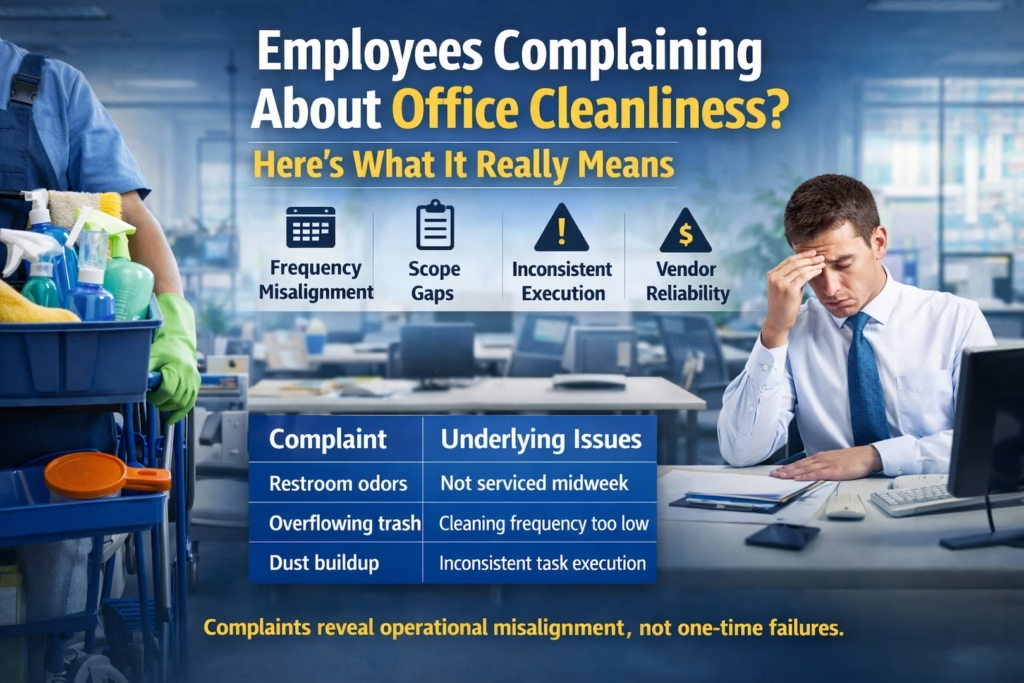
When employees start mentioning trash overflow, restroom odor, dusty conference tables, or a general lack of hygiene, it is rarely about one missed task.
It is about structure.
For an Office Manager or Facilities Manager, internal complaints about office cleanliness issues signal operational misalignment. Not cosmetic failure. Not emotional dissatisfaction. Operational misalignment.
This article explains what those complaints truly mean, what they reveal about your current Office Cleaning Services, and how to diagnose the root cause before the problem escalates into vendor replacement.
Why Do Employees Complain About Office Cleanliness in the First Place?
Employees usually complain when one of three things happens:
- Hygiene affects daily comfort
- Professional image feels compromised
- Cleanliness becomes inconsistent
The Real Drivers Behind Cleanliness Complaints
• Restroom odor midweek
• Trash bins overflowing before next visit
• Dust accumulation in meeting rooms
• Break room buildup
• Sticky floors or stained carpet
These are not isolated irritations. They are patterns.
| Complaint Category | What It Typically Indicates |
| Restroom issues | Cleaning frequency too low |
| Break room complaints | Usage increased without schedule adjustment |
| Conference room dust | Checklist inconsistency |
| Trash overflow | Misaligned visit timing |
Complaints are lagging indicators. The breakdown started earlier.
Are Employee Complaints a Cleaning Failure or a Scheduling Failure?
Most of the time, they are scheduling failures.
A cleaning crew can complete every assigned task correctly and still fail to meet expectations if the frequency no longer matches workload.
Situations That Trigger Frequency Misalignment
- Employee growth
- Shift from hybrid to full onsite
- Increased client visits
- Seasonal operational peaks
- Expansion of office space
| Operational Change | Cleaning Adjustment Required |
| +10 employees | Increase restroom sanitation frequency |
| Extended office hours | Move to after hours cleaning |
| More meetings | Increase conference room resets |
If cleaning frequency remains static while usage grows, complaints become inevitable.
Cleaning must scale with operations.
What Do Repeated Complaints Signal About Vendor Structure?
When complaints persist, the issue may not be frequency. It may be control.
Indicators of Weak Operational Structure
• No documented Cleaning Checklists
• No supervisor oversight
• No recurring service review
• Rotating cleaning staff without familiarity
A structured professional office cleaning company operates with predictable standards and visible oversight.
When oversight disappears, performance gradually declines.
Which Areas Trigger Complaints First?
Certain zones carry higher sensitivity.
High Risk Complaint Areas
• Restrooms
• Break rooms
• Lobby and reception areas
• Conference rooms
• High touch surfaces
These zones influence both employee comfort and client perception.
If these areas decline, complaints escalate faster.
How Do Office Cleanliness Issues Affect Business Performance?
Cleanliness impacts more than aesthetics.
Operational Consequences
• Decreased employee morale
• Increased management oversight time
• Negative client impression
• Reduced trust in vendor reliability
| Impact Area | Business Risk |
| Employee dissatisfaction | Lower productivity |
| Client facing cleanliness gaps | Brand damage |
| Constant complaints | Management distraction |
Ignoring office cleanliness issues creates friction that compounds over time.
Clean environments reduce invisible stress inside the organization.
Example Scenario: Mid Size Corporate Office
Office Profile
• 45 employees
• Two restrooms
• Three times weekly cleaning
• Mixed carpet and hard flooring
What Changed
Headcount increased by eight.
Break room traffic doubled.
No change in cleaning frequency.
Outcome
• Restroom odor by Wednesday
• Trash overflow on high traffic days
• Dust complaints in conference rooms
The cleaning company did not suddenly become incompetent.
The workload shifted without schedule adjustment.
This is how small misalignments turn into recurring complaints.
When Should You Take Complaints Seriously?
Immediately.
If complaints occur more than twice in a month regarding the same issue, that is structural feedback.
Waiting creates frustration cycles.
Structured review prevents escalation.
How Do You Diagnose the Real Cause Behind Office Cleanliness Complaints?
When employees raise concerns about cleanliness, the correct reaction is not to panic. It is to diagnose.
Complaints about office cleanliness issues usually fall into four structural categories:
- Frequency misalignment
- Scope definition gaps
- Execution inconsistency
- Weak vendor oversight
Identifying which category applies prevents unnecessary vendor replacement.
Is the Cleaning Frequency No Longer Matching Office Usage?
This is the most common cause.
Questions to Evaluate Frequency Alignment
• Has employee headcount increased
• Has hybrid shifted to full onsite
• Has client traffic increased
• Are restrooms used more heavily
• Are extended office hours now common
| Indicator | What It Means |
| Midweek restroom odor | Not enough visits |
| Trash overflow before next service | Frequency too low |
| Break room buildup | Usage not factored into schedule |
If usage increases and cleaning stays static, dissatisfaction follows.
Cleaning frequency must reflect real operational intensity.
Is the Service Scope Clearly Defined?
Sometimes complaints arise because expectations were never written down.
Common Scope Gaps
• Conference room table wiping not included
• Appliance cleaning in break room undefined
• Interior glass cleaning assumed but not listed
• Deep carpet extraction never scheduled
Scope Clarity Table
| Task | Clearly Defined in Contract | Complaint Risk |
| Restroom sanitization | Yes | Low |
| Fridge interior cleaning | No | High |
| Glass partitions | Undefined | Moderate |
If a task is not documented, it becomes subjective.
A structured professional office cleaning company should provide clear scope visibility.
When scope is transparent, complaints decrease.
Is the Cleaning Execution Inconsistent?
If frequency and scope are correct, inconsistency may be the issue.
Signs of Execution Variability
• Some days look spotless, others do not
• Supplies restocked inconsistently
• Trash liners forgotten occasionally
• High touch surface cleaning uneven
Execution inconsistency typically indicates weak quality control.
Does the Cleaning Provider Have Visible Oversight?
Oversight is the invisible stabilizer of recurring service.
Structural Oversight Indicators
• Assigned site supervisor
• Documented quality inspections
• Monthly service review
• Issue escalation protocol
| Oversight Level | Long Term Stability |
| No supervision | Gradual decline |
| Reactive supervision | Complaint cycles |
| Scheduled inspections | Predictable performance |
Without oversight, performance slowly erodes.
Consistency requires structure.
Are Employee Expectations Realistic?
Occasionally complaints stem from unrealistic expectations.
Situations That Create Expectation Gaps
- Employees expect daily deep cleaning with weekly service
- Personal desk organization confused with cleaning
- After hours cleaning unseen by staff
In these cases, communication between management and employees may be required.
Clarity reduces perception based complaints.
Practical Diagnostic Example
Scenario
• 30 employee accounting office
• Three times weekly cleaning
• Two restrooms
• Seasonal tax workload surge
Complaint Pattern
• Restroom odor during peak week
• Break room clutter midweek
Diagnosis
Seasonal usage increased dramatically.
Cleaning frequency remained unchanged.
The issue was workload expansion, not vendor failure.
Temporary frequency adjustment solved the problem.
When Is It a Vendor Reliability Problem?
Sometimes the issue is reliability.
Reliability Red Flags
• Missed cleaning appointments
• Late arrival
• No response to correction requests
• Frequent staff rotation
When these occur consistently, the issue is structural vendor instability.
That may require evaluating alternative providers.
Why Immediate Vendor Replacement Is Often a Mistake
Replacing a cleaning company without diagnosing the root cause can repeat the same cycle.
Replacement Risk Factors
• Same frequency misalignment
• Similar vague scope
• No oversight improvements
• Repeat complaint patterns
Switching vendors without structural adjustment does not guarantee improvement.
Stability comes from alignment, not just change.
How Do You Correct Office Cleanliness Issues Without Disrupting Operations?
Once the root cause is identified, correction must be structured.
The objective is simple:
Restore stability without creating additional friction.
Complaints about office cleanliness issues should trigger recalibration, not chaos.
How Should You Recalibrate Cleaning Frequency?
If the diagnosis points to frequency misalignment, adjustment should be measured and deliberate.
Frequency Adjustment Options
- Increase full office visits from weekly to three times weekly
- Move from three times weekly to daily service
- Add targeted restroom only visits
- Add temporary peak season support
| Adjustment Type | Cost Impact | Stability Impact |
| Add one extra weekly visit | Moderate | Noticeable improvement |
| Add daily restroom check | Low to moderate | High stabilization |
| Move to daily full cleaning | Higher | Maximum predictability |
Frequency recalibration is often the fastest path to resolving recurring complaints.
When usage increases, frequency must follow.
How Do You Refine Service Scope to Prevent Repeated Complaints?
Scope gaps create ambiguity.
Ambiguity creates dissatisfaction.
Scope Clarification Actions
• Confirm all high touch surface cleaning tasks
• Define break room appliance responsibility
• Schedule periodic deep carpet extraction
• Clarify interior glass cleaning frequency
Scope Reinforcement Table
| Area | Standard Cleaning | Periodic Deep Service |
| Restrooms | Daily sanitization | Monthly detail |
| Break room | Surface wipe each visit | Appliance deep clean |
| Carpet | Routine vacuum | Quarterly extraction |
A structured professional office cleaning company should be able to provide documented checklists aligned to your expectations.
Clarity eliminates gray zones.
How Do You Strengthen Vendor Accountability?
If inconsistency is the problem, oversight must increase.
Accountability Reinforcement Measures
- Request documented inspection logs
- Schedule monthly service reviews
- Assign a single point of contact
- Require supervisor walk through quarterly
| Oversight Model | Expected Outcome |
| Informal communication | Continued variability |
| Structured review meetings | Predictable performance |
| Scheduled inspection reporting | Reduced complaints |
Accountability reduces randomness.
Randomness is what employees perceive as decline.
How Should You Communicate With Employees During Adjustment?
Transparency prevents perception escalation.
Internal Communication Approach
• Acknowledge feedback
• Inform staff of adjustments
• Set realistic expectations
• Monitor response after changes
Employees respond positively when they see corrective action.
Ignoring feedback damages trust.
Practical Correction Scenario
Office Profile
• 50 employee professional office
• Three times weekly cleaning
• Two restrooms
• Increased onsite attendance
Correction Plan
Step 1
Add daily restroom sanitation
Step 2
Maintain three full office visits
Step 3
Schedule quarterly performance review
Outcome
Restroom complaints disappeared within two weeks.
No vendor replacement required.
The adjustment restored alignment.
When Should You Consider Replacing the Cleaning Provider?
Replacement becomes appropriate when structural reliability fails.
Replacement Indicators
• Missed scheduled visits
• No response to correction requests
• Repeated inconsistency after adjustments
• Lack of insurance or compliance clarity
| Indicator Severity | Action |
| Isolated issue | Correct and monitor |
| Repeated minor issues | Escalate and review |
| Chronic reliability failure | Replace provider |
Replacement should follow structured evaluation, not frustration.
Advantages and Disadvantages of Adjusting Versus Replacing
Adjusting Current Provider
Advantages
• Faster resolution
• Lower transition friction
• Preserves operational continuity
Disadvantages
• Requires structured oversight
Replacing Provider
Advantages
• Opportunity for stronger structure
• Reset of expectations
Disadvantages
• Learning curve
• Risk of repeating same structural mistakes
• Temporary instability
Strategic correction often delivers better results than reactive replacement.
How Do You Decide Between Adjustment and Replacement?
At this stage, the decision should be analytical, not emotional.
When employees raise repeated concerns about office cleanliness issues, you must evaluate four structural pillars:
• Frequency
• Scope
• Execution
• Oversight
If three of these are stable, adjustment is appropriate.
If two or more are unstable, structural replacement may be required.
Cleaning stability is built on alignment, not luck.
A Practical Evaluation Framework for Office Managers
This framework allows you to assess your current Office Cleaning Services objectively.
Pillar 1: Frequency
Ask:
- Has employee count increased
- Has onsite presence grown
- Are complaints clustered midweek
- Has restroom traffic intensified
If the answer is yes to most of these, frequency misalignment is likely.
Frequency problems are correctable without replacement.
Pillar 2: Scope Clarity
Review your contract and checklist.
Scope Validation Questions
• Are break room appliances listed
• Are conference tables wiped every visit
• Is interior glass included
• Are periodic deep services scheduled
If tasks are undefined, complaints are predictable.
Scope gaps require documentation, not termination.
Pillar 3: Execution Consistency
Observe patterns.
Execution Red Flags
• Visible inconsistency between visits
• Supplies not restocked
• Tasks skipped intermittently
| Execution Pattern | Structural Meaning |
| Minor variability | Oversight gap |
| Frequent variability | Process weakness |
| Random performance | Lack of supervision |
Inconsistent performance requires accountability reinforcement.
A structured professional office cleaning company should operate with documented processes.
Pillar 4: Vendor Reliability
Reliability determines long term viability.
Reliability Assessment Checklist
• Are visits ever missed
• Are issues corrected quickly
• Is communication responsive
• Is insurance current
| Reliability Level | Recommended Action |
| Stable | Adjust and monitor |
| Occasionally unstable | Escalate oversight |
| Chronically unreliable | Replace provider |
Reliability failures are the strongest justification for replacement.
What Is the Cost of Ignoring Complaints?
Ignoring recurring office cleanliness issues creates layered impact.
Operational Consequences
• Increased employee dissatisfaction
• Declining client perception
• Higher management time spent on complaints
• Reduced trust in vendor structure
| Impact Category | Business Risk |
| Internal morale | Productivity decline |
| Client facing impression | Reputation risk |
| Management time | Operational distraction |
Cleanliness stability is infrastructure.
When infrastructure fails, friction multiplies quietly.
Real World Decision Scenario
Office Profile
• 42 employees
• Three times weekly cleaning
• Two restrooms
• Increased client meetings
Evaluation
Frequency misaligned
Scope clear
Execution consistent
Reliability stable
Decision
Add targeted restroom sanitation visit.
No replacement required.
Complaints stopped within three weeks.
The correction addressed the structural variable.
When Replacement Becomes the Right Move
Replacement becomes appropriate when:
- Frequency adjustments do not resolve complaints
- Scope clarification does not change outcomes
- Execution remains inconsistent
- Reliability failures persist
At that point, operational trust is compromised.
A new Commercial Office Cleaning Company with structured processes becomes necessary.
Strategic Perspective for Office Managers
Employee complaints about cleanliness are not noise.
They are operational diagnostics.
When addressed through structured analysis of frequency, scope, execution, and oversight, most problems can be resolved without disruption.
When ignored, they escalate into vendor turnover cycles.
The objective is simple:
Stable, recurring, predictable cleaning that does not require constant supervision.
That is what protects operational peace.
Final Perspective
Clean offices do not create praise.
They create silence.
No complaints.
No follow up emails.
No daily inspection routines.
When your cleaning structure reaches that level, you stop managing it.
And that is the real benchmark.