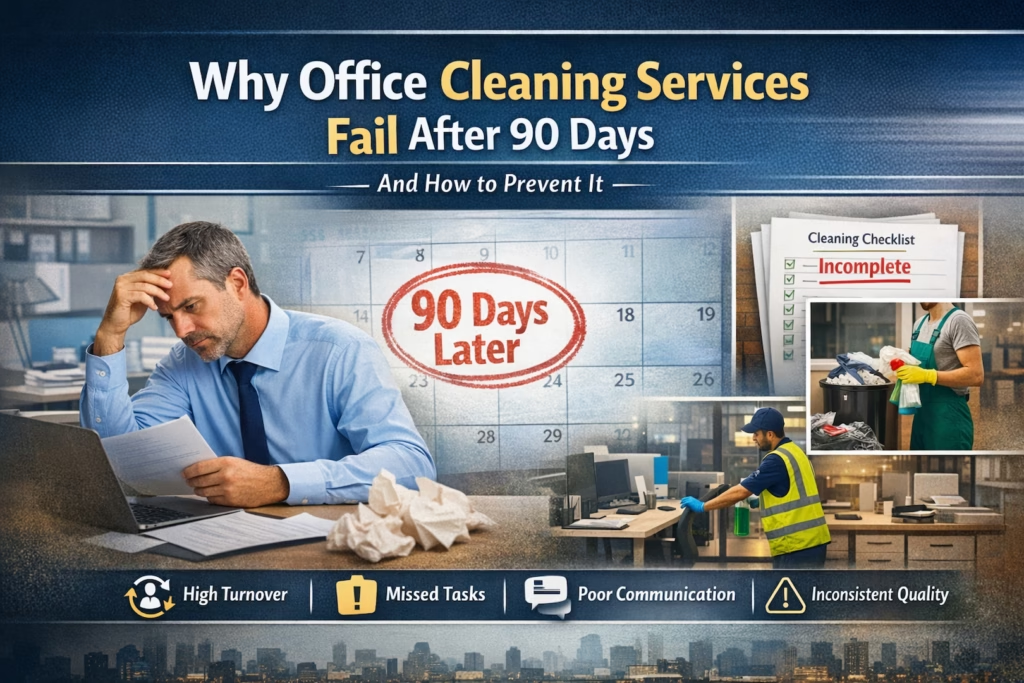
Most Office Cleaning Services do not fail in the first week. They fail quietly between day 60 and day 120.
At the beginning, everything looks fine. The walkthrough is professional. The proposal is clear. The first few weeks feel structured. Then consistency drops. Small details are missed. Communication slows down. Complaints start.
For the Office Manager or Facilities Manager, the problem is not dirt. The problem is unpredictability.
This article explains why recurring Commercial Office Cleaning contracts collapse after the honeymoon phase and what structured businesses can do to prevent it.
What Actually Changes After the First 90 Days
During the first 30 days, performance is artificially high. Cleaning teams are under supervision. Management attention is strong.
After that, operational gravity takes over.
The 5 Operational Shifts That Cause Decline
- Supervisor visibility decreases
- Checklists stop being verified
- Staff rotation increases
- Communication becomes reactive
- Expectations were never fully documented
None of these are dramatic failures. They are slow erosion points.
If your Recurring Office Cleaning agreement does not include structured review cycles, quality fades by default.
Why Most Cleaning Contracts Are Built for Sales Not Stability
Many Office Cleaning Companies design proposals to close deals, not to sustain operations.
What Sales Focused Contracts Usually Emphasize
• Attractive pricing
• Broad service descriptions
• Flexible scheduling promises
• Fast onboarding
What Stability Focused Contracts Must Include
• Detailed Cleaning Checklists
• Defined cleaning frequency
• Clear scope boundaries
• Documented escalation protocol
• Service review cadence
| Element | Sales Driven Agreement | Stability Driven Agreement |
| Scope Detail | General description | Specific task breakdown |
| Frequency | Implied | Written and scheduled |
| Accountability | Informal | Assigned supervisor |
| Quality Control | Assumed | Documented process |
If scope is vague, performance becomes subjective.
Operational clarity prevents future friction.
How Misaligned Expectations Destroy Cleaning Performance
Most breakdowns are not labor failures. They are expectation failures.
Typical Misalignment Areas
• Restroom deep sanitization frequency
• Break room appliance cleaning
• Carpet maintenance versus simple vacuuming
• Trash removal timing
• After hours access rules
When an Office Cleaning Company believes vacuuming equals floor care but the client expects periodic Carpet Cleaning, dissatisfaction becomes inevitable.
Expectations must be written, not assumed.
Why Staff Turnover Impacts Cleaning Consistency
Cleaning is labor intensive. High turnover destabilizes service delivery.
What Happens When Staff Changes Frequently
• Learning curve resets
• Office layout familiarity disappears
• Missed high touch surfaces increase
• Accountability weakens
Even a strong Commercial Cleaning Company struggles without documented systems.
Preventive Measure
Require confirmation that the provider uses:
• Background Checked Cleaners
• Standardized training
• Supervisor audits
• Quality control verification
These operational signals reduce turnover risk impact.
The Hidden Role of Communication Gaps
Communication failures compound small service issues.
Common Communication Breakdowns
- Complaints not escalated
- No single point of contact
- Delayed response to service issues
- No structured review meeting
If issues accumulate without resolution, contract fatigue sets in.
Consistency in communication protects contract longevity.
Example Scenario: A 50 Employee Law Office
A mid sized Law Office signs a Professional Cleaning Services contract for five day weekly service.
Month 1
Everything is aligned. Restrooms clean. Conference rooms reset. Trash removed daily.
Month 3
• Break room fridge not wiped
• Lobby dusting inconsistent
• Trash liners occasionally missing
Employees complain. The Office Manager spends time inspecting instead of managing.
The service did not collapse overnight. It decayed through small unchecked gaps.
Without structured oversight, this pattern repeats across industries including Accounting Offices, Consulting Firms, and Corporate Offices.
What Makes Office Cleaning Sustainable Beyond 90 Days
Sustainability depends on operational infrastructure.
Core Stability Drivers
• Documented task scope
• Defined cleaning frequency
• Scheduled performance reviews
• Consistent After Hours Office Cleaning timing
• Local accountability
A structured cleaning provider behaves like infrastructure, not a vendor experiment.
How to Prevent Cleaning Performance From Declining After 90 Days
If failure after 90 days is predictable, prevention must be structured.
Most Office Cleaning Services decline because there is no formal control system between the client and the provider. Stability does not happen by goodwill. It happens by design.
Prevention starts before the contract is signed.
How to Define Scope So Nothing Becomes “Optional”
Ambiguity is the root cause of inconsistency.
What Must Be Explicitly Written in the Scope
- Every cleaning zone
- Exact tasks per zone
- Frequency per task
- Time window for service
- Responsibility for consumables
Example of Clear Scope Structure
Instead of writing:
“Restroom cleaning included.”
Write:
• Restroom sanitization daily
• Toilet and sink disinfection daily
• Mirror cleaning daily
• Trash removal daily
• Floor mopping daily
• Deep grout cleaning monthly
Specificity eliminates interpretation.
When scope is detailed, quality becomes measurable.
Why Cleaning Frequency Must Match Office Reality
Cleaning frequency should reflect operational intensity, not pricing pressure.
Variables That Influence Frequency
• Employee count
• Visitor traffic
• Shared kitchen usage
• Restroom density
• Carpet coverage
| Office Type | Recommended Frequency | Risk If Under Serviced |
| 15 employees low traffic | Three times per week | Gradual odor buildup |
| 50 employees standard use | Daily cleaning | Restroom complaints |
| 100 employees high traffic | Daily plus midweek touch up | Hygiene decline |
Under servicing creates slow dissatisfaction. Over servicing increases cost without benefit.
Frequency alignment protects both budget and satisfaction.
How to Create Accountability Without Micromanaging
Office Managers do not have time to inspect every desk. Oversight must be efficient.
Practical Oversight Framework
• Monthly service review
• Quarterly scope reassessment
• Single point of contact
• Documented issue log
Sample Review Structure
- Review complaint trends
- Confirm checklist adherence
- Evaluate high traffic zones
- Adjust frequency if needed
Oversight should validate systems, not replace them.
When accountability is structured, trust increases.
Why Quality Control Must Be Proactive
Reactive service leads to erosion.
Signs of Reactive Cleaning
• Issues addressed only after complaints
• No supervisor walk through
• No documented inspection
Signs of Proactive Professional Office Cleaning
• Scheduled supervisor visits
• Random quality checks
• Written performance verification
| Quality Model | Outcome Over 6 Months |
| Reactive | Complaint accumulation |
| Proactive | Stable service perception |
Proactive oversight prevents small issues from compounding.
How Staffing Structure Impacts Long Term Consistency
Labor stability determines cleaning reliability.
What to Confirm With Any Commercial Cleaning Company
• Are cleaners assigned consistently to the same site
• Is there backup coverage
• Is there supervisor oversight
• Are staff members trained on your specific layout
A rotating team without site familiarity increases missed tasks.
Consistency of personnel increases performance consistency.
How Communication Structure Reduces Churn
Contracts rarely fail because of one missed trash bag. They fail because issues accumulate without resolution.
Communication Standards That Protect Stability
- Defined response time
- Clear escalation chain
- Scheduled feedback window
- Confirmation of issue resolution
Communication clarity prevents frustration escalation.
When feedback loops are structured, small service gaps do not become termination triggers.
Comparing Stable Contracts Versus High Churn Contracts
| Characteristic | Stable Contract | High Churn Contract |
| Scope Detail | Precise | Broad |
| Review Meetings | Scheduled | None |
| Supervisor Presence | Active | Rare |
| Communication | Structured | Sporadic |
| Staff Consistency | Assigned | Rotating |
High churn providers rely on constant new sales. Stable providers focus on retention.
Retention benefits both client and provider.
The Role of After Hours Cleaning in Long Term Success
Cleaning during business hours increases friction.
Benefits of After Hours Service
• Zero employee disruption
• Better cleaning focus
• Reduced complaint visibility
• Higher perceived professionalism
For most Corporate Offices, After Hours Office Cleaning protects workflow and reduces complaint frequency.
Timing directly affects perception of quality.
Why Price Focused Decisions Lead to 90 Day Failure
Price driven contracts often compromise:
• Staffing levels
• Supervision
• Quality control
• Training
Short term savings produce long term instability.
Operational stability has cost alignment.
How Compliance and Documentation Determine Long Term Stability
After the first 90 days, operational discipline becomes the difference between stability and decline.
Many Office Cleaning Services operate informally once the contract feels routine. That is where risk grows.
A stable cleaning operation is documented.
What Documentation Should Always Exist
• Written service agreement
• Detailed task schedule
• Defined cleaning frequency
• Insurance verification from an Insured Cleaning Company
• Emergency response protocol
When documentation exists, performance is measurable. Without documentation, disputes become subjective.
Documentation protects both the Office Manager and the Commercial Cleaning Company.
Why High Touch Surface Cleaning Becomes a Weak Spot Over Time
During onboarding, High Touch Surface Cleaning receives attention. Over time, it is often deprioritized.
High Risk Surfaces in Most Offices
- Door handles
- Conference table edges
- Light switches
- Shared kitchen appliances
- Elevator buttons
If these surfaces are not explicitly included in recurring checklists, they fade from routine.
A structured cleaning plan should define frequency for each high contact area.
When hygiene routines become assumption based instead of schedule based, quality erodes gradually.
How Office Growth Disrupts Cleaning Stability
Growth changes cleaning demand silently.
Growth Indicators That Require Cleaning Adjustment
• Increase in employee headcount
• Higher restroom usage
• Expanded office footprint
• More frequent client visits
| Growth Factor | Cleaning Impact |
| 10 new employees | Increased trash volume |
| New conference room | More surface sanitization |
| Hybrid to full in office shift | Higher daily traffic |
If frequency remains unchanged while usage increases, dissatisfaction is inevitable.
Cleaning contracts must evolve with business operations.
Why Lack of Periodic Reassessment Causes Decline
Many contracts remain static while the workplace changes.
Recommended Review Cadence
• Monthly performance check
• Quarterly scope reassessment
• Annual pricing and workload alignment
A contract signed once and never revisited almost guarantees slow degradation.
Structured reassessment maintains alignment between expectations and delivery.
In House Oversight Versus Outsourced Accountability
Some companies attempt to compensate for service decline by increasing internal monitoring.
Risks of Overcompensation
• Office Managers inspecting daily
• Employees reporting minor issues directly
• Reactive communication spikes
This creates operational distraction.
A better solution is strengthening provider accountability rather than increasing internal supervision.
The Difference Between Task Completion and Performance Reliability
Cleaning tasks can be completed without the service being reliable.
Task Completion Focus
• Trash removed
• Floors vacuumed
• Restrooms wiped
Performance Reliability Focus
• Consistency every visit
• No supervision required
• Minimal complaints
• Predictable standards
| Focus Model | Long Term Outcome |
| Task Only | Gradual dissatisfaction |
| Reliability Driven | Operational peace |
Reliability is what prevents churn after 90 days.
How Contract Structure Influences Retention
Contracts that emphasize Recurring Cleaning Contract terms and clear service boundaries outperform flexible but vague agreements.
Strong Contract Characteristics
- Clear service frequency
- Defined communication protocol
- Performance verification steps
- Adjustment mechanism for growth
Flexibility without structure invites inconsistency.
Structure without flexibility creates rigidity.
The balance sustains retention.
Common Red Flags That Predict Contract Failure
Early signals often appear before termination.
Warning Signs
• Frequent last minute schedule changes
• Increased staff rotation
• Delayed response to issues
• Vague answers during review meetings
These indicators suggest structural instability.
Identifying red flags early allows corrective action before frustration escalates.
How Local Accountability Strengthens Service Stability
Local providers who operate within a defined service radius often demonstrate higher consistency.
Benefits of a Local Office Cleaning Company
• Faster issue resolution
• Supervisor availability
• Community reputation awareness
• Reduced travel related delays
Proximity increases accountability.
In local service industries, reputation drives performance discipline.
Preventing the 90 Day Collapse Through System Design
Sustained performance requires:
• Clear scope
• Defined frequency
• Documented oversight
• Communication rhythm
• Growth adjustment
• Compliance alignment
When these elements exist, Professional Office Cleaning Services transition from vendor relationship to operational infrastructure.
How to Build a Cleaning System That Does Not Collapse After 90 Days
If most Office Cleaning Services fail due to erosion, prevention requires system design.
Cleaning must move from vendor activity to operational infrastructure.
The difference is structure.
Below is a practical prevention model built for Office Managers, Facilities Managers, and Property Managers who want stability without daily supervision.
Step 1: Define What Success Looks Like Before Day One
Most contracts define tasks. Few define performance standards.
Questions That Must Be Answered Clearly
- What areas are considered high priority zones
- What tasks are daily versus periodic
- What does acceptable restroom condition mean
- What response time is expected for issues
- What frequency matches real traffic volume
When expectations are operationally defined, subjectivity disappears.
A stable Commercial Office Cleaning relationship begins with clarity, not assumption.
Step 2: Align Frequency With Reality Not Budget Pressure
Cutting frequency to reduce cost often accelerates dissatisfaction.
Frequency Alignment Model
| Office Size | Traffic Level | Recommended Service |
| Small Professional Office | Low | Three times weekly |
| Mid size Corporate Office | Moderate | Daily scheduled cleaning |
| High traffic Business Office | High | Daily plus additional touch ups |
Under servicing increases complaints. Over servicing increases unnecessary cost.
The correct frequency protects operational balance.
Step 3: Require Visible Quality Control
Cleaning without supervision fades.
What to Confirm With Any Professional Office Cleaning Provider
• Assigned site supervisor
• Documented inspection routine
• Verification of Cleaning Checklists
• Defined communication channel
| Control Level | Long Term Outcome |
| No verification | Performance decline |
| Periodic inspection | Stability |
| Structured review cycle | High retention |
Verification prevents silent degradation.
Step 4: Establish a Simple Review Rhythm
You should not wait for complaints to review service quality.
Practical Review Framework
• Monthly performance check
• Quarterly workload alignment
• Annual scope reassessment
These reviews do not need to be long. They need to be consistent.
Consistency prevents erosion.
Step 5: Build Growth Adjustment Into the Agreement
Offices evolve. Cleaning must evolve with them.
Growth Triggers That Require Adjustment
- Increased employee headcount
- Shift from hybrid to full in office
- Additional workspace or conference rooms
- Increased visitor volume
Without adjustment, service quality declines while expectations rise.
A strong Recurring Cleaning Contract includes flexibility within structure.
Advantages of a Structured Cleaning System
Operational Benefits
• Predictable hygiene standards
• Reduced employee complaints
• Lower management oversight time
• Stable vendor relationship
• Stronger brand perception
Advantages Versus Disadvantages Comparison
| Structured Cleaning Model | Unstructured Cleaning Model |
| Clear scope | Vague expectations |
| Defined schedule | Irregular performance |
| Documented accountability | Informal supervision |
| Stable retention | Frequent vendor changes |
The advantage is not cleaner floors. The advantage is reduced management friction.
The Real Cost of Replacing a Cleaning Provider
Switching providers appears simple. It rarely is.
Hidden Replacement Costs
• Time spent evaluating alternatives
• Walkthrough coordination
• Proposal comparison
• Adjustment period
• Temporary inconsistency
Replacing a provider resets the learning curve.
Retention through structure is more efficient than reactive replacement.
Warning Signs That You Should Intervene Before Termination
Early correction prevents churn.
Indicators to Monitor
• Increase in minor complaints
• Inconsistent trash removal
• Restroom condition variability
• Delayed responses from management
If these signals appear, initiate structured review before considering replacement.
Proactive correction often restores stability.
The Long Term View: Cleaning as Infrastructure
When structured correctly, Office Cleaning Services become invisible.
Employees stop noticing. Managers stop checking. Complaints decline.
That is the objective.
Cleaning should not require emotional investment or constant oversight. It should operate quietly within defined standards.
When it does, operational continuity is protected.
Closing Perspective
Most cleaning contracts do not fail because providers lack skill. They fail because systems lack structure.
When scope is clear, frequency aligned, oversight documented, communication defined, and growth adjustments built in, the 90 day decline does not occur.
Reliable cleaning is not about intensity. It is about consistency.